
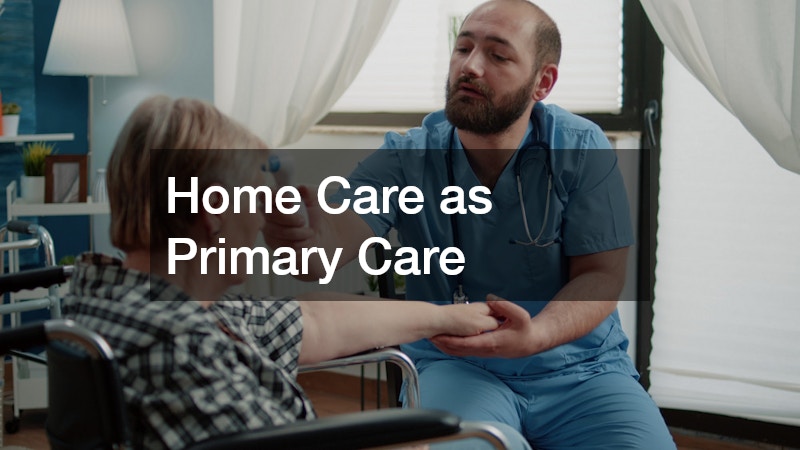
The landscape of healthcare is undergoing significant transformation, with home care emerging as a pivotal aspect of primary healthcare provision.
Home care fosters a patient centered approach, recognizing the diverse needs of individuals who may find it challenging to access hospital based services.
The integration of home care into primary healthcare reflects an evolving understanding of how best to serve populations, especially in regions where healthcare infrastructures are strained.
What is Home Care as Primary Care?
Definition and Scope
Home care as primary care involves a broad spectrum of services delivered directly to patients in their homes, encompassing both medical and supportive care.
By focusing on the home as a primary site of care, patients benefit from a reduction in the need for frequent hospital visits, decreasing both financial and logistical burdens.
The home care approach represents a strategic shift towards integrating social determinants of health into care plans, recognizing factors like living conditions and patient lifestyle as influential.
Key Components
The effectiveness of home care hinges on several key components that collectively ensure comprehensive healthcare delivery.
Moreover, personalized care plans are fundamental in home care delivery, emphasizing tailored interventions that align with individual health goals and preferences.
Another integral component is the utilization of technology, such as telehealth services, to augment care quality and reach.
How Does Home Care Impact Patient Outcomes?
Improvement in Chronic Disease Management
Home care significantly impacts chronic disease management by providing continual monitoring and personalized interventions that cater to the unique needs of each patient.
By enabling healthcare providers to closely observe patient conditions in their natural environment, more accurate and timely interventions can be administered.
Furthermore, family members and caregivers play a pivotal role, facilitated by home care practices, in supporting chronic disease management.
Enhancing Patient Satisfaction
Patient satisfaction is a key outcome positively affected by home based primary care.
In home care allows healthcare providers to engage patients in a familiar setting, fostering open communication and stronger patient provider relationships.
Additionally, the flexibility inherent in home care schedules accommodates diverse patient lifestyles and preferences, further boosting satisfaction.
What Are the Challenges of Implementing Home Care?
Financial Constraints
The implementation of home care services poses financial challenges that affect its viability and accessibility.
Reimbursement policies also play a crucial role in shaping the financial landscape of home care services.
To mitigate financial challenges, collaborations between public health institutions, insurance providers, and private entities are essential.
Workforce and Training Needs
Developing and maintaining a skilled workforce is another significant challenge in implementing home care as primary care.
The diverse needs of home care patients necessitate training that encompasses both technical skills and empathetic communication abilities.
Moreover, attracting and retaining home care professionals can be challenging due to the demanding nature of the work and limited resources.
How Does Technology Enhance Home Care Services?
Telemedicine Integration
Integrating telemedicine into home care services enhances care delivery through increased accessibility and convenience.
Telemedicine also supports continuous monitoring of chronic conditions, enabling real time data collection and remote management.
However, successfully implementing telemedicine requires addressing several challenges, including technology access and training for both patients and providers.
Electronic Health Records (EHRs)
Electronic Health Records (EHRs) play a transformative role in enhancing the quality and continuity of home care services.
The integration of EHRs in home care settings supports systematic tracking of patient progress and enables data driven decision making.
Despite the benefits, integrating EHRs presents challenges such as data privacy concerns and interoperability issues.
What Is the Future of Home Care as Primary Care?
Emerging Trends and Innovations
The future of home care as primary care is poised for innovation, driven by emerging trends that prioritize personalized, tech driven solutions.
Moreover, smart home technologies and IoT (Internet of Things) devices are transforming in home health management.
Collaborative care models and integrated service networks are also gaining traction, breaking down silos within the healthcare system.
Long term Implications for Healthcare Systems
The long term implications of integrating home care into primary care systems include improved healthcare equity and efficiency.
Cost reduction is another profound implication, as providing care in home settings can decrease the financial burdens associated with hospital admissions and long term facility stays.
Ultimately, these transformations necessitate a shift in policy frameworks, emphasizing preventative, technology enabled home based care.
The integration of home care into primary healthcare systems marks a pivotal shift towards more accessible, efficient, and personalized care delivery.
Home care as primary care is an embodiment of modern healthcare’s commitment to overcoming barriers and enhancing patient engagement.
The integration of home care into primary care frameworks is not merely a trend but a strategic necessity in advancing global health systems.